
Guaitil is more than a stop for souvenirs. The village is one of the communities where Chorotega pottery remains part of family knowledge, local identity and everyday work.
Guaitil, in the canton of Santa Cruz, is widely known for ceramics made with techniques and visual traditions associated with the Chorotega cultural heritage.
In Guaitil, pottery is not presented only as an ancient object in a museum. Artisans continue to prepare clay, shape vessels, apply natural pigments and fire finished pieces. Skills are shared within families and across generations.
Costa Rica’s Ministry of Culture describes Chorotega ceramics as living heritage in communities including Guaitil, San Vicente and Las Pozas. Research from the University of Costa Rica also documents Guaitil as an important centre of this continuing tradition.
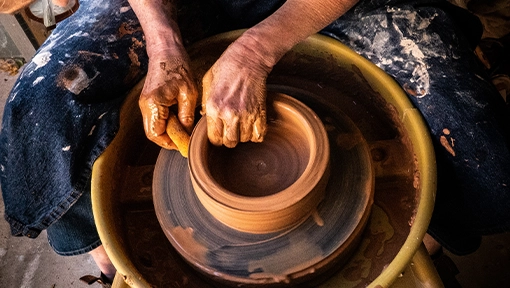
Each workshop has its own methods and designs, but visitors may see several stages that turn local materials into finished ceramics.
The raw material is cleaned and prepared before it can be shaped. The quality and origin of the clay matter to the final piece.
Artisans form practical and decorative objects, then add motifs and colours. Traditional pigments commonly include red, white and black tones.
The finished form must dry before firing. This stage hardens the clay and completes a process that requires time and experience.
Chorotega pottery connects historical knowledge with the realities of present day artisan work.

A visit becomes more meaningful when travellers can speak with artisans, observe the work and understand how much time goes into each piece. Buying directly from a workshop can also keep more of the value within the community.
Visitors should avoid treating every object with an indigenous inspired pattern as equivalent. The University of Costa Rica has warned that imported imitations can be confused with ceramics made by artisans in Guaitil and San Vicente.
Ask who made the piece, where it was produced and which materials were used. These questions open a conversation and help you choose with more care.
Guaitil is a working community. A thoughtful visit gives artisans space to explain their work and does not reduce the village to a quick shopping stop.
Guaitil is in the canton of Santa Cruz in Guanacaste. It can be visited as a cultural stop from several beach communities and from the Nicoya and Santa Cruz area.
Some workshops offer demonstrations, but availability can vary. Contact the workshop or arrange the visit in advance, especially for families and larger groups.
Yes, a pottery demonstration can support an educational visit when the content, group size, ages and materials are agreed with the local provider in advance.
Our separate Guaitil visitor guide covers planning, what to expect and how to combine the village with other experiences in Guanacaste.
This article combines the original Tempisque Expeditions guide with updated information from Costa Rica’s Ministry of Culture and Youth, the University of Costa Rica and the Costa Rica Tourism Board.
Use our practical guide to understand the village, prepare your visit and contact us if you are organising a private or educational group.