
Monte Alto Forest Reserve protects a cooler, greener landscape above Hojancha on Costa Rica’s Nicoya Peninsula. Come for shaded trails, orchids, birdlife and broad views across Guanacaste, and plan the visit with realistic information about the road, weather and facilities.
Monte Alto is a 924-hectare private nature reserve near the community of Pilangosta, south of Hojancha. Elevations rise from roughly 450 to 900 metres, creating a noticeably cooler environment than many coastal areas of Guanacaste.
Pilangosta, approximately 6 km south of central Hojancha on the Nicoya Peninsula.
Plan around two to four hours for a relaxed visit. Allow longer if you hike to a viewpoint or arrange an overnight stay.
Shaded walking, birds, orchids, forest restoration, photography and a quieter alternative to Guanacaste’s beaches.
Check before travelling: Published visitor information has listed Monday–Saturday, 8:00 a.m.–4:00 p.m., and an admission fee of about US$5. Hours, prices, accommodation and road access can change. Confirm the current details with the reserve or a local contact before setting out, especially during the green season.
Monte Alto is more than a place to hike. The reserve grew from a local response to deforestation and declining water resources around Hojancha. Community members organised to protect the watershed and restore forest on the surrounding slopes.
The Fundación Pro Reserva Natural Monte Alto was established in the early 1990s. Its work helped recover habitat while protecting water sources used by nearby communities. Today, the landscape offers an accessible example of how conservation and local participation can reinforce one another.
This history is the strongest reason to visit with care. Entrance fees and authorised services help support the reserve, while responsible behaviour protects the work that began decades ago.

This short report explains how local residents responded to deforestation and helped restore the forests and water sources around Hojancha.
Published descriptions mention four trails, including a route associated with orchids and a longer climb towards the Cerro Romo viewpoint. Trail names, access and conditions may change, so ask the staff which route is open and appropriate on the day of your visit.
Choose a shorter trail if you want shade, plants and birds without committing to a long climb. This is usually the most practical option for families or a half-day itinerary.
Monte Alto is known for a rich variety of orchids and other plants. Flowering depends on season and conditions, and sightings should never be guaranteed.
The longer uphill option can reward hikers with broad views across Hojancha, the Nicoya Peninsula and, in clear conditions, towards the Pacific. Expect steeper and potentially slippery sections.
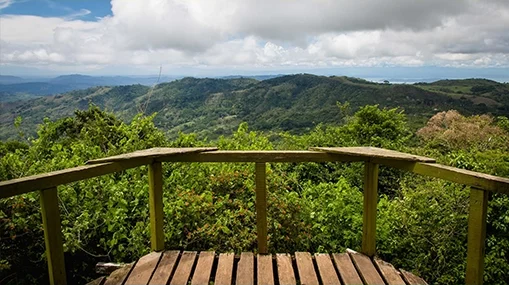
The protected area is the Monte Alto Forest Reserve. Cerro Romo is associated with the high viewpoint reached from the reserve area. The former title of this article used “Monte Romo” for the entire destination, which could confuse visitors. This guide now uses the correct reserve name while retaining Cerro Romo where it refers to the viewpoint.
Monte Alto’s transition between tropical humid forest and very humid premontane forest supports varied plant and animal life. Published surveys and local research have documented birds, orchids, mammals and an exceptional diversity of moths.
Camera-trap work described by biologist Vincent Losasso recorded collared peccaries, tayras, ocelots and pumas. These records demonstrate the ecological value of the reserve, but they do not mean visitors are likely to see these secretive mammals on a daytime walk.
Birds, insects, plants and changing forest sounds are more realistic highlights. Walk quietly, carry binoculars if you have them and treat every sighting as a bonus.
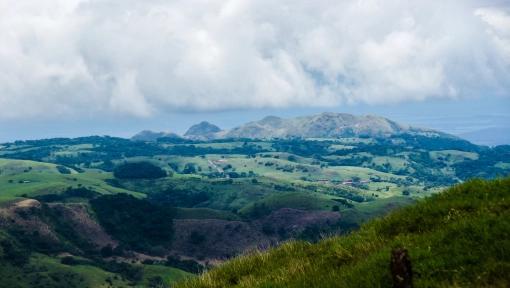
December to April is usually drier in Guanacaste. Monte Alto’s elevation and canopy can provide welcome shade, although trails and vegetation may look less lush.
May to November brings greener forest and more rain. Expect mud, slippery sections and possible changes in road or trail conditions.
Closed shoes with grip, drinking water, rain protection, insect repellent and binoculars. Carry out everything you bring in.
The reserve is reached through Hojancha in Guanacaste. The final approach leaves the main town area and continues towards Pilangosta and the reserve. The last section can be steep or uneven, and conditions change after heavy rain.
Follow current navigation towards Reserva Natural Monte Alto and confirm the final turn locally. Do not rely on an old written direction alone.
Travel first towards Hojancha, then continue to the reserve. Allow extra time for the final road and avoid planning the return after dark.
A standard vehicle may be sufficient in good dry conditions. Higher clearance or four-wheel drive can be useful after rain. Ask locally before departure.
Distances in rural Guanacaste can look short on a map while taking longer than expected. Start early, save the route for offline use and confirm both the road and opening status on the day of your visit.
Monte Alto works well as a nature-focused half-day or day trip. If you are staying around Sámara, combine the wider itinerary with coffee, local food or a hosted cultural experience rather than trying to rush several distant attractions into one day.
The reserve is near Pilangosta, south of Hojancha on Costa Rica’s Nicoya Peninsula in Guanacaste.
No. Monte Alto is the name of the nature reserve. Cerro Romo refers to a high viewpoint associated with the reserve area.
Allow around two to four hours for a relaxed visit. Longer routes, birdwatching or an overnight stay require more time.
Not necessarily in good dry conditions, but the last road section can be steep or uneven. Four-wheel drive or higher clearance may be helpful during or after heavy rain. Confirm current conditions locally.
Published information has listed Monday through Saturday, 8:00 a.m.–4:00 p.m., with admission around US$5. Treat these as planning guidance and confirm current details before travelling.
Birds, insects and plant life are realistic highlights. Larger mammals occur in the wider forest but are secretive, so no specific wildlife sighting can be guaranteed.
Past visitor information mentions rustic accommodation. Availability, capacity, meals and reservations must be confirmed directly before planning an overnight stay.
This guide is prepared for Tempisque Expeditions and reviewed from a Guanacaste travel perspective. We distinguish documented conservation facts from wildlife expectations and flag visitor information that should be reconfirmed.
Last reviewed: September 2026
Sources: Conservation reporting by Voz de Guanacaste; visitor and field information by The Tico Times; existing Tempisque Expeditions field notes and media.